About
Healing as
collaboration.
Hi, I'm Ting-Ting. I work with people who are thoughtful, self-aware, and quietly tired of carrying everything alone — people who are very good at showing up for others and still figuring out how to let others show up for them.
I'm a licensed clinical psychologist with over a decade of experience. My clients are, by most measures, doing well — and still struggling. High-achievers, deep thinkers, people who hold a lot together and sometimes find the weight of that exhausting.
My style is direct. I'll ask the uncomfortable question. I'll name the pattern you've been circling for years. I'll call you out when you're rationalizing — kindly, but clearly. If that sounds like what you've been missing in therapy, we'll probably get along.
That said, I don't think therapy has to be relentlessly heavy. I laugh with my clients. I think humor and warmth are part of how real change happens — not in spite of the hard stuff, but alongside it.
My clinical background spans crisis response and high-risk work, adolescents under enormous pressure, adults navigating burnout and identity, and culturally responsive care — particularly for people who've spent their lives navigating spaces that weren't designed with them in mind.
What I've noticed is that these are often the same people who are wonderful at being there for others — and less practiced at letting anyone be there for them. They're known for being capable, reliable, generous. They're not always sure they're actually known. That's the work I find most meaningful: not just helping people feel better, but helping them become someone they recognize — and let others recognize too.
Process over protocol.
You over technique.
My work is centered on process — not manualized treatment or one-size-fits-all techniques. The goal is mental flexibility and resilience: the capacity to be aware of what's happening inside you, open to it rather than be controlled by it, and actively engaged in a life that reflects what matters to you.
Together, we identify the specific processes keeping you from that — the ways you think, relate, avoid, or engage — and work to shift them. The question isn't just what is hard, but how it stays hard, and what it takes to move differently.
I work well with people who are ready to be challenged, who want a real relationship with their therapist — a therapist who shows up as a real person, not just a professional — and who are willing to invest in themselves seriously. My practice is private pay, and I work with people who see that investment as part of the commitment to doing this right.
I work from a trauma-informed lens across everything I do. Whatever brings someone in — anxiety, burnout, identity, family dynamics, major life transitions — I'm always thinking about what's underneath it and how the past is shaping the present.
How I got here.
I didn't always know I wanted to be a therapist. Growing up, I thought I'd be a teacher. Then I started watching Law & Order SVU and became fascinated by the FBI psychiatrist — the first Asian person I'd ever seen in a mental health role on screen. (Shout out to BD Wong! iykyk.) Something clicked. I took a psychology class my senior year of high school and never looked back.
Getting here was painstaking but persistent. I moved to the Bay Area in 2011, quickly fell in love with life without winter, and just as quickly realized that criminal profiling was not a career path I could actually tolerate. Over time I found my way to the work I was meant to do — and discovered that I loved working with children, teens, and families just as much as I loved working with adults.
I've been lucky to work across a wide range of settings: schools, community mental health centers, hospitals, pediatric oncology and diabetes management, ADHD and autism assessment and support, and crisis work with high-acuity teens and families. I've worked with highly traumatized populations and spent years doing the kind of intensive, high-stakes clinical work that keeps you humble in the best possible way.
At Kaiser, I've been a specialist working with teens in crisis and with low-income, high-acuity families — work I genuinely love. So much of it has been about getting people to a place where they want to live, where they can start to imagine building a life worth living. My team there is exceptional, and the populations I've been able to serve have shaped me as a clinician in ways I'm deeply grateful for. I'm in the process of transitioning fully into private practice — and the shift in focus feels meaningful. In private practice, the work begins where that foundation ends: building the life worth living, and then going further.
In 2021, burned out from nonstop appointments through the pandemic, I started looking for something to revitalize my passion for this work. That search led me to psychedelic-assisted therapy. I completed a nine-month training program and it added a depth to both my practice and my own life that I hadn't anticipated. It brought me back to what I love most about this work: being present with people in the depths of what it means to be human.
I'm genuinely excited about this next chapter — in my career and in my life — and curious to see where it leads. If any of this resonates, I'd love to meet you and work with you.
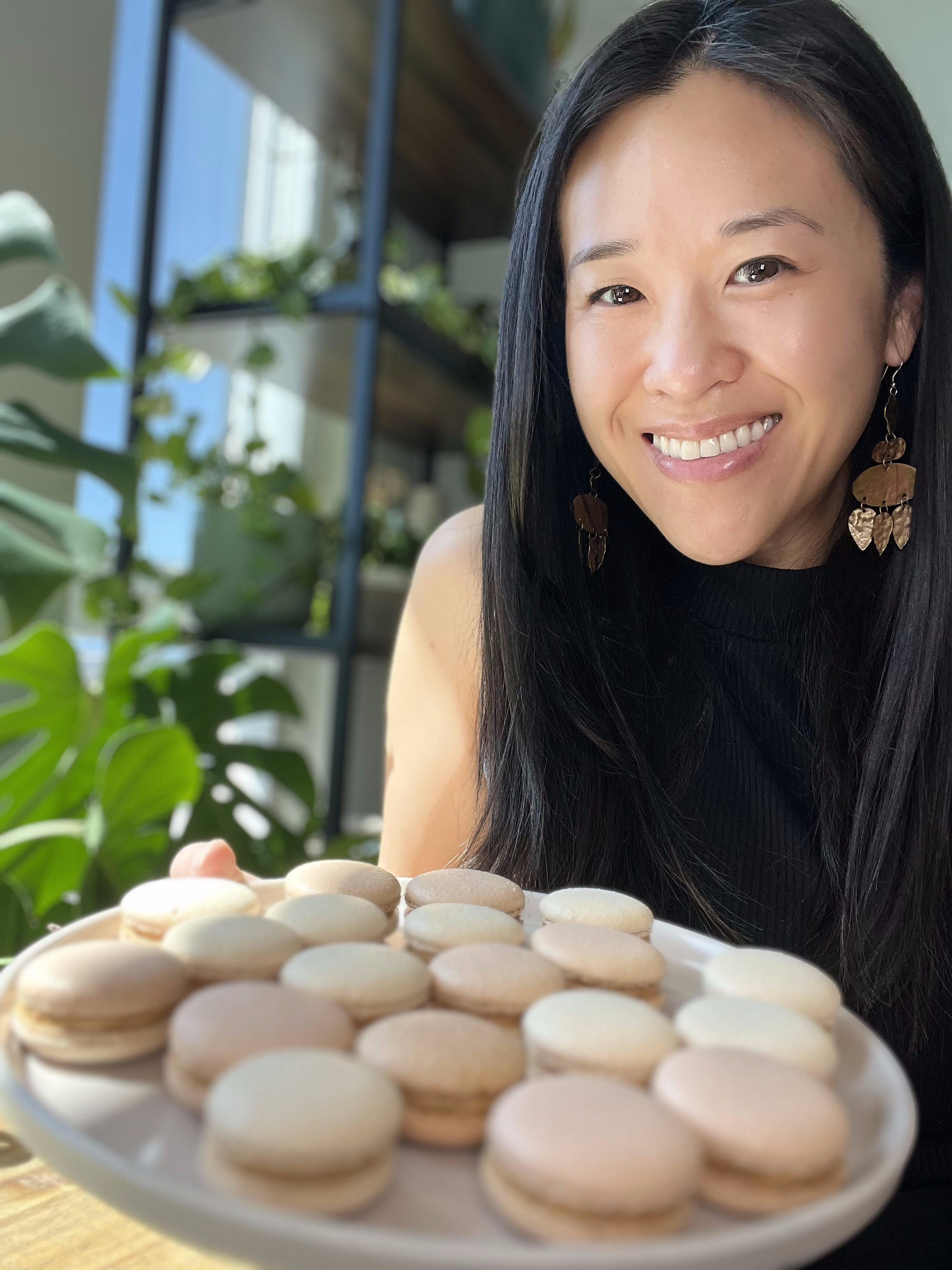
Outside of work, I try to practice what I preach about living a full life. I still love a good fantasy or sci-fi audiobook. I bake macarons, I travel whenever I can, I go to concerts, and I genuinely love spending time with my friends and their kids. I also exercise regularly — I don't always love the process, but I love the feeling of accomplishment after.